Bumble
Client
Bumble
Location
London, UK
Year
2025
Overview
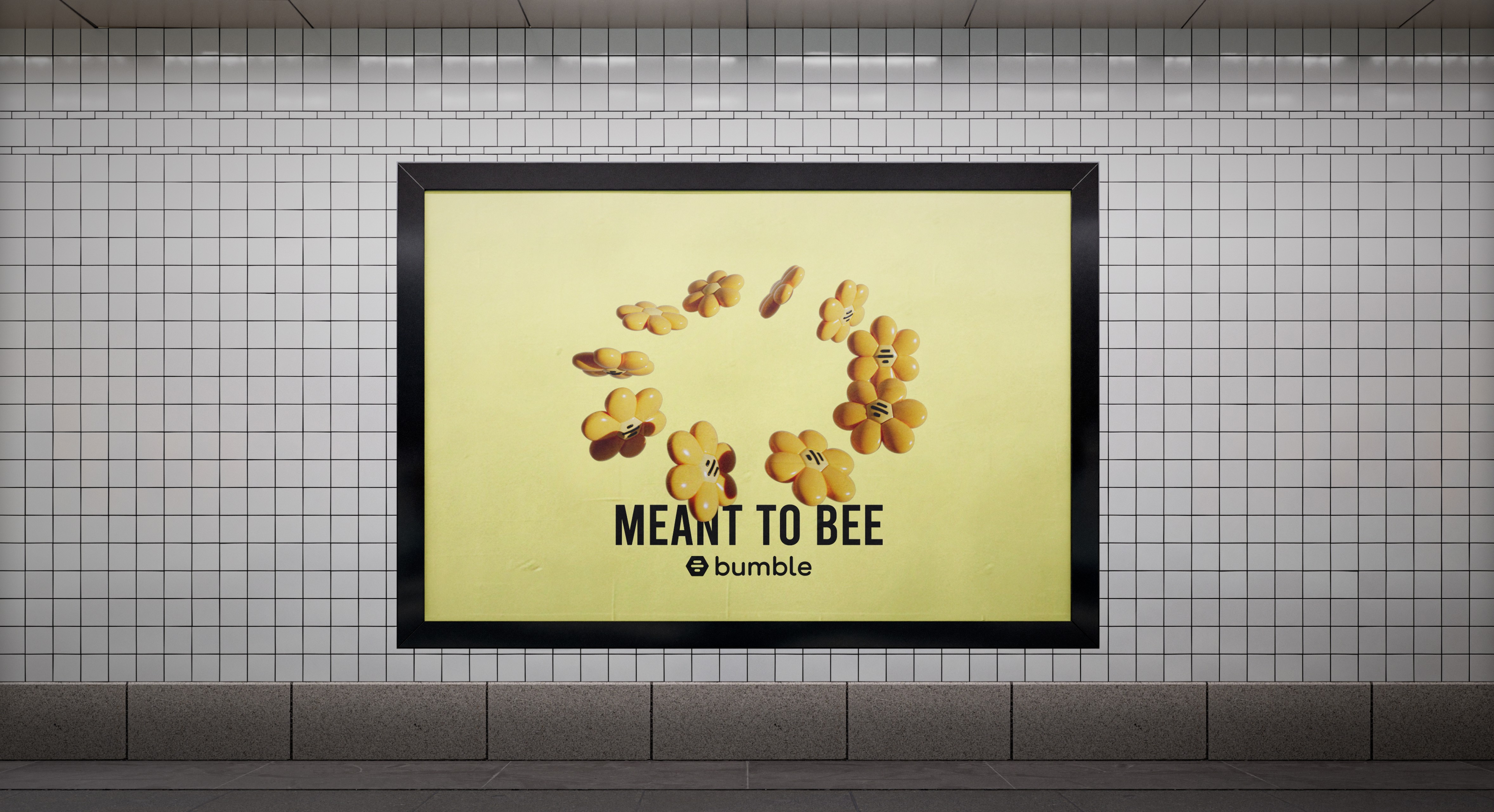
During my internship as a Motion Designer at Stereo Creative, I produced a set of high-fidelity motion concepts for Bumble. The goal was not delivery to end users, but persuasion at stakeholder level. Stereo wanted to secure further work with Bumble by demonstrating how existing visual assets could scale into polished, expressive motion.
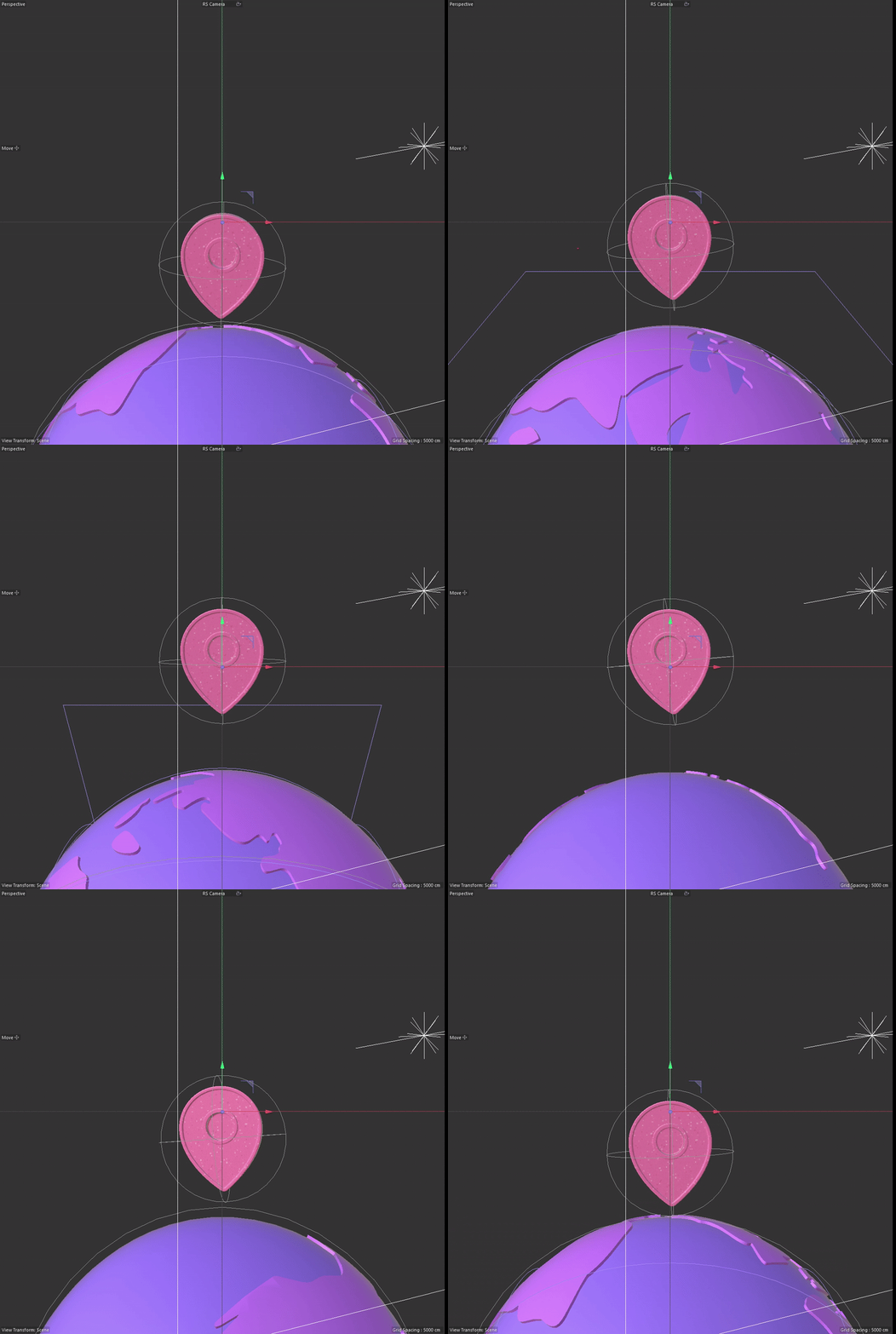
Working from pre-existing design assets created before my time at the studio, I translated static brand elements into short-form animations using Cinema 4D. The focus was on clarity, brand alignment, and showing range without over-engineering. This project tested my ability to work within constraints, make fast creative decisions, and produce client-facing work that supports commercial outcomes.

The Problem
We needed to prove additional value to Bumble without a new brief, new assets, or direct access to the client team. The challenge was to elevate existing visuals into motion pieces that felt intentional, premium, and strategically useful rather than speculative or decorative.
As an intern, I also had to operate within tight review cycles and ensure my work aligned with senior motion designers’ expectations. Any output needed to feel credible enough to sit in front of a major brand without extensive explanation. The problem was less about inventing ideas and more about demonstrating restraint, judgement, and an understanding of how motion supports brand communication.
Key Insights
I reviewed Bumble’s existing motion language, tone of voice, and in-product interactions to understand how animation supports clarity and emotion within the brand. I also studied previous Stereo Creative work for Bumble to identify what had resonated internally and where motion could push further.
A key insight was that Bumble’s brand benefits from confident, readable motion rather than complex visual effects. Subtle timing, strong easing, and spatial consistency mattered more than technical complexity. Internally, I observed that work pitched for future opportunities needed to feel immediately usable. This shaped my approach towards producing concise, modular animations rather than one-off hero moments.

The Solution
I created a series of short motion explorations in Cinema 4D, translating existing Bumble assets into dynamic compositions that emphasised rhythm, hierarchy, and brand warmth. I focused on camera movement, timing, and transitions that could realistically be adapted for product, marketing, or social contexts.
Each animation was designed to communicate an idea quickly without explanation. I iterated based on internal feedback, simplifying where motion distracted from the message and refining where clarity could be improved. The final outputs were packaged as presentation-ready videos, allowing the team to showcase motion capability as a natural extension of the existing Bumble work.

Impact & Results
The animations were presented internally as part of Stereo Creative’s outreach to Bumble and contributed to demonstrating the studio’s continued value beyond the original project scope. The work helped position Stereo as proactive rather than reactive, showing how existing brand systems could be extended through motion.
For me, the project strengthened trust within the motion team and proved I could deliver client-facing work under real constraints. It also added production-ready motion pieces to Stereo’s internal library, increasing their reuse potential. While indirect, the impact was commercial, practical, and aligned with how agencies actually win repeat work.

What I Learnt
This project reinforced that good motion design is often about judgement, not complexity. Working with fixed assets forced me to think critically about timing, restraint, and brand alignment rather than relying on novelty.
I also learned how speculative work differs from academic or personal projects. The goal is credibility and usefulness, not self-expression. Every decision needed to justify itself quickly. Presentability mattered as much as craft. This experience sharpened my ability to design motion that supports business goals, communicates clearly to stakeholders, and fits naturally within an established creative ecosystem.